Thai doesn’t normally separate words with spaces.So we built tools that do.
Ten minutes a day to turn a Thai sentence into something you can actually read, hear, and say — words first, then syllables and tones.
What Thai does to you
Five problems English speakers hit in Thai — and the tool for each
You can’t tell where a word ends
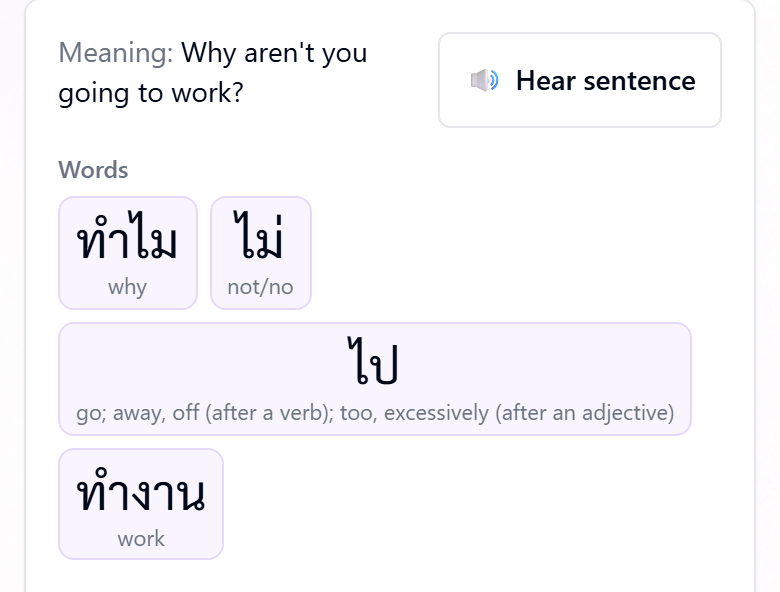
ทำไมไม่ไปทำงาน is four words with nothing between them. Our reader is dictionary-backed, so it keeps a compound whole instead of shattering it into syllables — and when a span is genuinely ambiguous it says so rather than picking.
You read every letter and still say it wrong
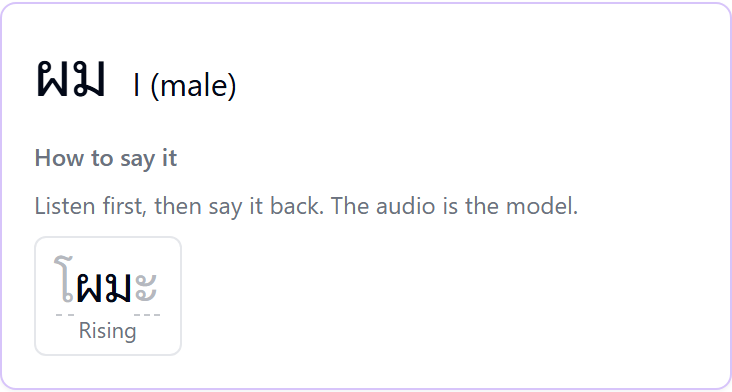
Thai spelling often leaves part of the pronunciation implicit. ผม is written with two letters and said with a vowel that appears nowhere on the page. We fill that in, faded, so what is written and what is said finally line up.
Five tones
Every syllable here carries its tone — but only where we have checked it against reviewed evidence. Where the evidence does not settle it, the tone is withheld and we say nothing. An honest gap beats a confident wrong answer you will practise for a month.
Someone listened to every clip before you did
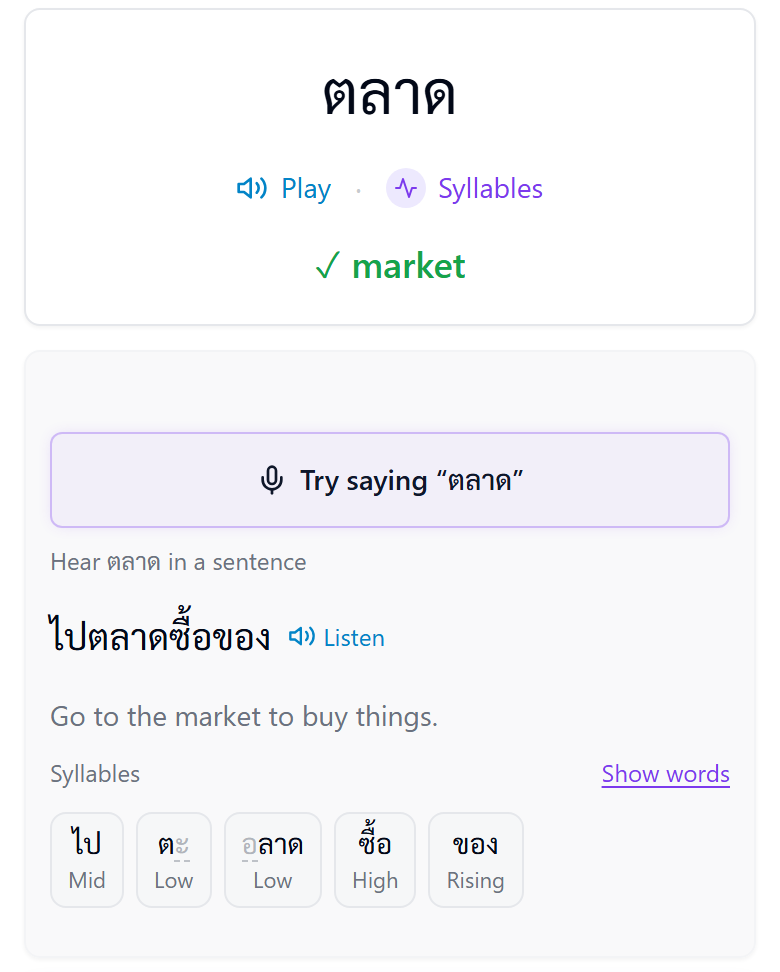
Every clip is generated ahead of time, then listened to and approved or thrown away one take at a time — 8,267 of them so far. Nothing is spoken by your browser while you practise, and a clip that sounds wrong gets replaced.
You forget, and nothing notices
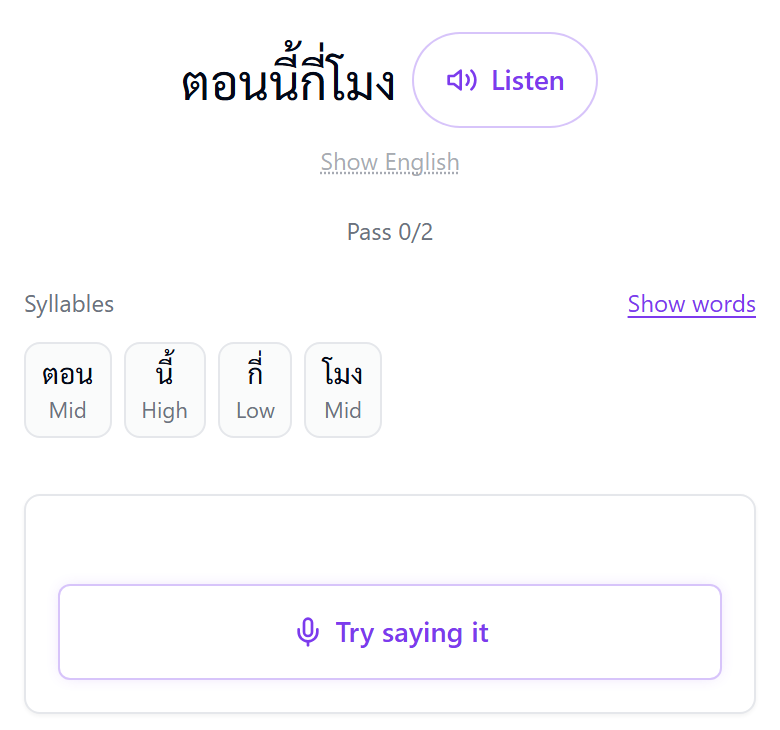
Every drill writes into one error bank. A word you missed in a reading exercise comes back in a listening one, on a spacing schedule, until it stops being a mistake — you do not have to remember what you got wrong.
Your progress is rated on what you actually practised and scored, not on how many days you turned up.
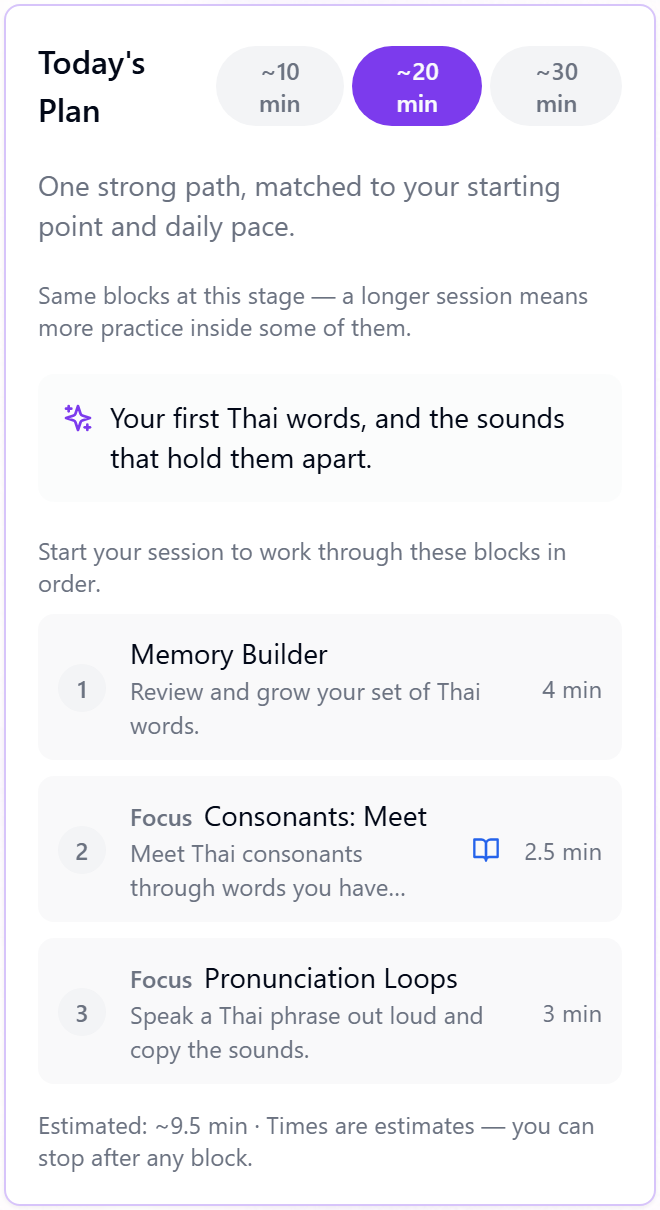
Ten minutes, already decided
You don’t have to pick a focus. The plan does.
A short placement puts you where you actually are, and you can override it. Your first week is one authored sequence — the same one for everybody, because those first writing-system skills build on one another.
After that the plan follows your weak points. Get a run of answers wrong and it eases off rather than drilling you harder on the thing that is not landing.
This is not a startup
One person, a corpus, and a lot of listening
There is no growth team here and no funding round. Every headword was reviewed by hand, every sentence checked against the words it claims to teach, and every clip approved by ear. It is free, and there is nothing to cancel.
- 2,059
- reviewed headwords
- 2,203
- sentences, each tied to its words
- 8,267
- clips, approved take by take
- 57
- writing-system lessons
Read one Thai sentence. Two minutes.
Learn six useful words by ear, then read a sentence that uses them.