Speaking · about 10 minutes
Conversation Toolkit
The small set of patterns that carry most conversations: how to ask, how to say more than a word, how to handle a transaction, and how to state what you think.
No signup. Four lanes, drill any.
Today’s Plan uses this to give a learner something to say once they can hear and read a little.
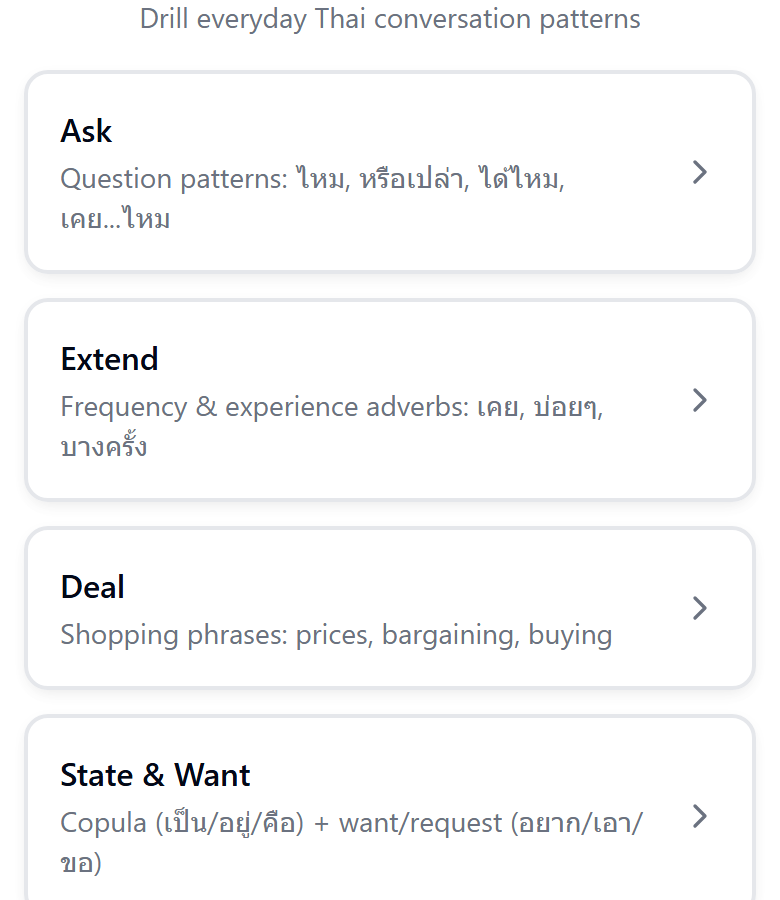
What a round looks like
Four lanes, named by what they let you do
Organised by conversational job, not grammar label
Ask holds the question patterns — ไหม, หรือเปล่า, ได้ไหม, เคย…ไหม. Extend holds the frequency and experience words that turn a one-word answer into a sentence. Deal is shopping: prices, bargaining, buying. State is for opinions.
Drilled in several directions
Pick the right pattern, fill a gap, reorder a scrambled sentence, or build a reply to something said to you. Recognising a pattern and producing one under time pressure are different skills, and only the second is useful in a shop.
The reply-builder is the one closest to real conversation: you are given the other person’s line and have to assemble yours.
- 4
- lanes: ask, extend, deal, state
- 4
- drill types, including a reply builder
- Patterns
- named in Thai, not grammar jargon
- Everyday
- phrasing, not textbook register
Say them well
Pronunciation Loops drills the saying of a line you already understand.
Pronunciation Loops