Tool · a minute per word
Tone Explorer
Paste a Thai word and watch the tone get worked out — syllable by syllable, with the rule that decided each one shown rather than asserted.
No signup. Paste anything, or tap an example.
This is a reference tool rather than a drill, so Today’s Plan does not schedule it. It is here for the moment a tone surprises you.
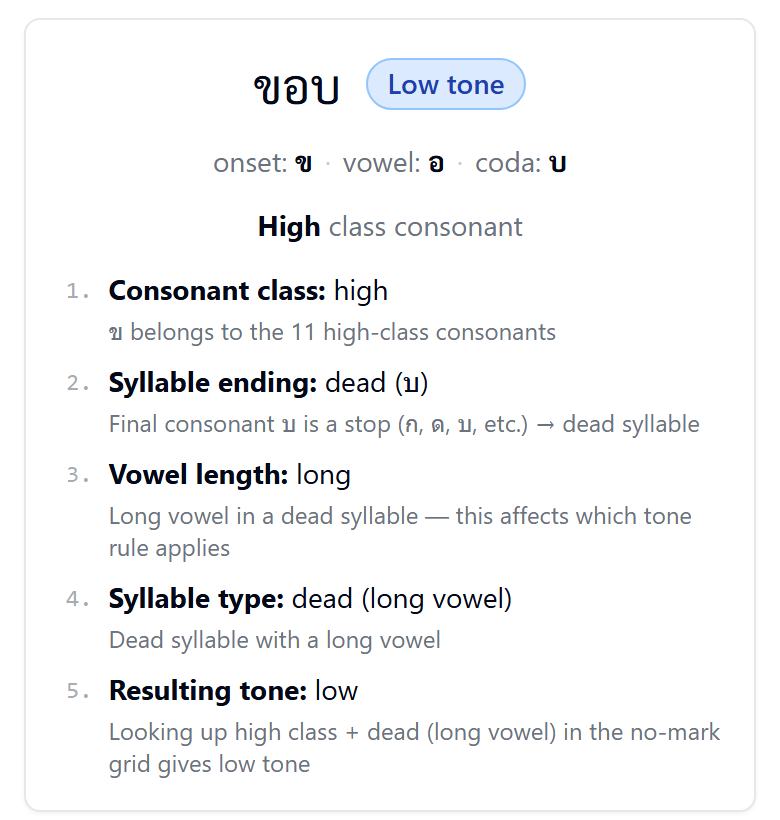
What a round looks like
Not the answer — the working
It shows the decision, not just the result
Consonant class, vowel length, live or dead syllable, tone mark: the tone of a Thai syllable is the output of a short chain of facts, and the explorer walks it. Once you have seen the chain run a few times you start predicting the end of it yourself.
And it says when it is not sure
Where the spelling rules and the recorded pronunciation disagree — which happens, especially with loanwords and names — the explorer marks the analysis as an estimate instead of printing a tone with false confidence.
Spelling-predicted tone and spoken tone are different claims. A word whose recording disagrees with its rule is not necessarily a defect, and the tool is built to say so.
- Any
- Thai you paste, not a fixed word list
- Per-syllable
- analysis, not per word
- Shown
- rules, not just an answer
- Marked
- when the evidence is uncertain
Train what this explains
Tone Pairs is the drill for hearing the difference the rules predict.
Tone Pairs