Tones · about 5 minutes
Tone Pairs
Five tones, and they change what a word means. Meet them as pitch shapes you can hear, then train the ear that has to tell them apart in real speech.
No signup. Headphones help more here than anywhere else.
Today’s Plan brings this back when your tone answers start slipping, and eases off if a run of them goes wrong.
What a round looks like
Meet the tones, then prove you can hear them
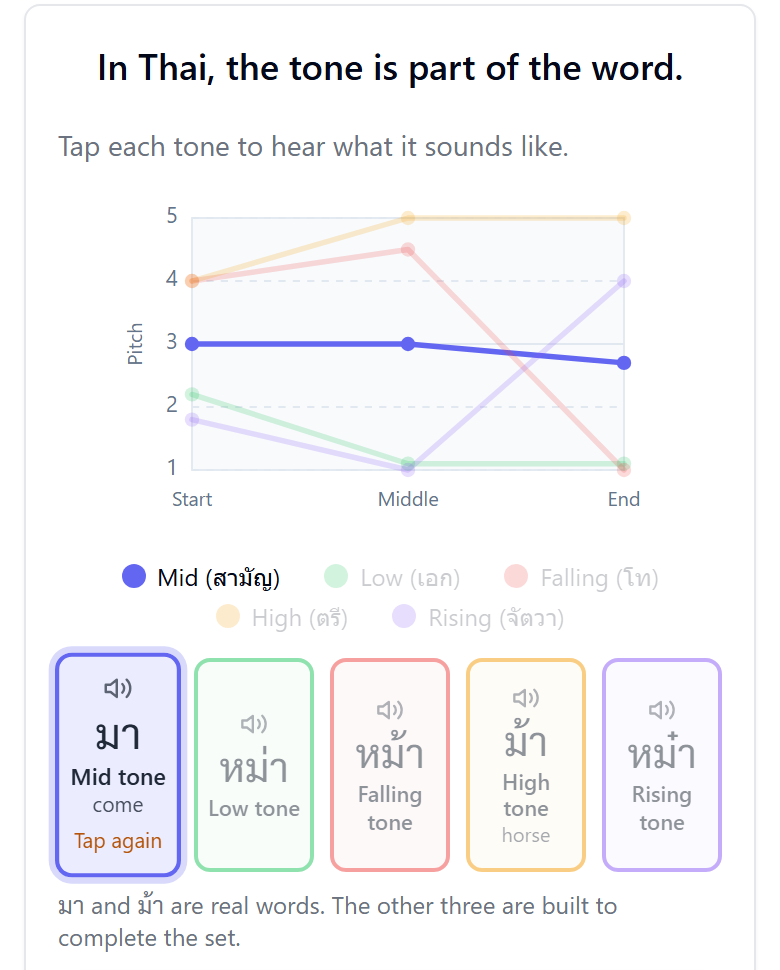
The five tones as shapes, not descriptions
"Falling" and "high" are useless until you have heard them next to each other. The chart plots the pitch of all five, and each card plays the real recording — มา and ม้า are genuine words, the other three are built to complete the set, and the card says so rather than pretending otherwise.
Two ways to be tested, and you pick
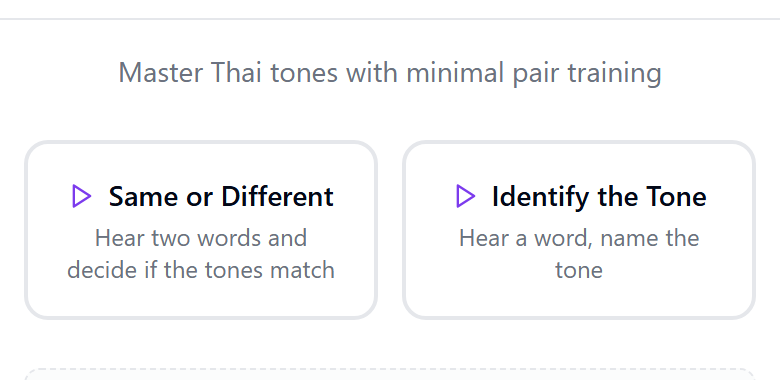
Same or Different plays two words and asks whether the tones match — the judgement you actually make in conversation. Identify the Tone asks you to name what you heard, which is harder and comes later. Neither is a gate: they are there when you want them.
- 5
- tones, each with a recording you can replay
- 3
- modes: meet them, compare them, name them
- 10
- items in a round
- Recorded
- never browser speech
Why tones do this to English speakers
English uses pitch for mood, so a rising tone sounds like a question rather than a different word. That habit is what has to be unlearned.
Thai tones explainedTones inside real words
Memory Builder shows the tone of every syllable in the words you are learning, so the training here has somewhere to go.
Memory Builder